Miramar, FL · Garage Door Service
What a Miramar Garage Door Service Call Actually Covers
See what a Miramar garage door service call actually includes, from spring checks on 1960s-70s doors to track fixes suited to this area's mild climate.
- Repairs & new doors
- Springs & openers
- Serving 4 nearby communities
The Situation
Most houses in this service area went up between 1953 and 2005, with the thickest cluster built in the 1960s and 70s, which still shows in the door hardware we find on a truck roll. Across the 45 named areas we cover, that 1960s-70s stock means a lot of original steel doors sitting on torsion hardware sized to specs nobody stocks anymore, or on extension springs that were already old news by the time the house next door went up in the 80s or 90s. A service call here starts with figuring out which era of door we're looking at before we even talk about what's broken. With 130,249 owner-occupied houses spread across this stretch of South Florida, a sizable share of them still run the door that came with the house, patched here and there, never fully replaced. That's not a knock on the owners. It's just what a median build year of 1972 looks like forty-plus years later: original parts mixed with whatever got swapped in during the last repair, and a spring or cable rated for a weight the door may not even be anymore if panels were swapped along the way.
What the Weather Here Does to It
The mild temperate band here skips the deep freeze-thaw cycles that crack slabs and warp track up north, so when a track binds in this area it's almost always age, impact, or a loose bracket, not ice splitting a hinge. What the climate here does instead is slower and less dramatic: steady heat and humidity work on lubricant, rubber seals, and any exposed steel over the years, so grease that would last winters up north turns gummy faster here, and bare hinges or hardware that's never been touched start to bind from gunk, not rust from road salt. On a 1960s-70s door that's original or close to it, that slow wear shows up as a roller that chatters going up, a spring that's lost tension before it visibly breaks, or an opener motor running longer and hotter than it should to move a door that isn't moving as freely as it did when it was new. None of that is an emergency by itself. It's just the kind of wear a service call is built to catch before the spring actually snaps on a Sunday.
Where People Go Wrong
The most common mistake we see on these older doors is an owner or a handyman replacing one worn part with whatever's on the shelf at the hardware store, without checking whether it matches the rest of a system built decades ago on different sizing. A torsion spring rated for a modern lightweight steel door doesn't behave the same on a heavier original panel from the 1960s or 70s, and a cable that's close enough in diameter isn't actually close enough when it's under tension. The second mistake is spraying everything with whatever lubricant is handy, which in this humidity can attract more grit than it clears, especially on hardware that hasn't been cleaned in years. The third is ignoring an opener that's straining, because a motor that labors to lift an unbalanced door is burning itself out to compensate for a spring problem, and by the time the opener fails too, you're paying for two repairs instead of one. A service call isn't just fixing the thing that broke. It's checking balance, tension, and hardware match before something else goes.
When It Stops Being a DIY Job
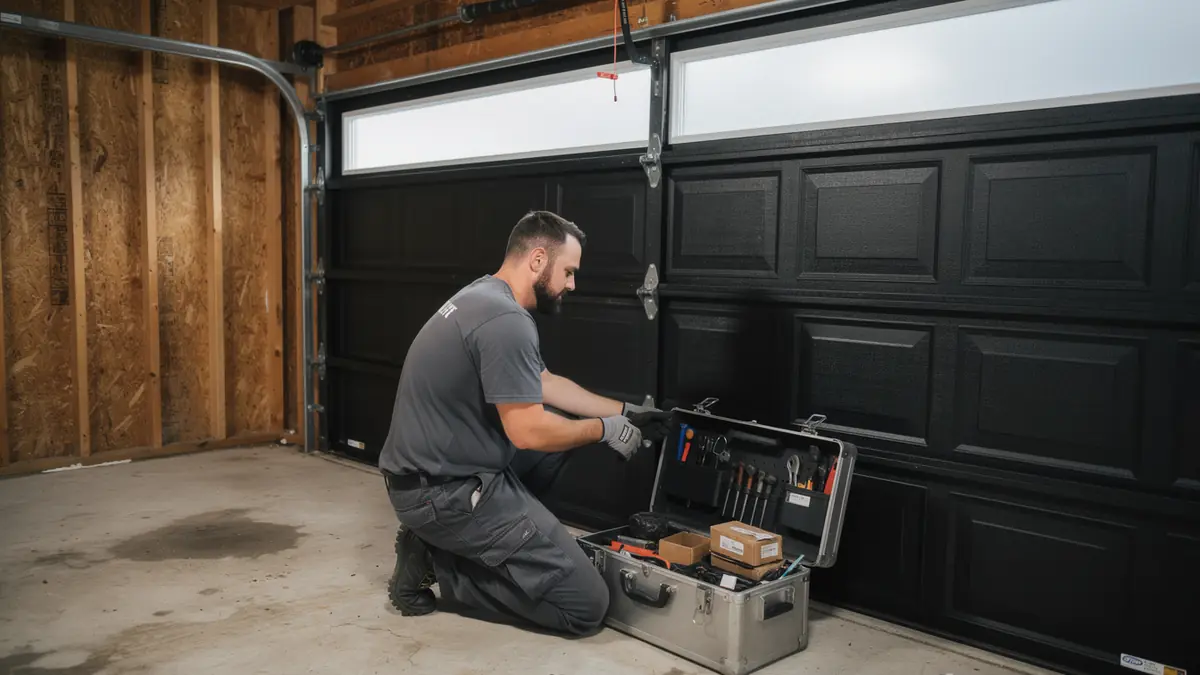
A broken torsion spring on a double door isn't a project for a Saturday afternoon. Torsion springs are wound under enough tension to cause a real injury, and on an older door where the hardware may not match current stock sizes, getting a replacement that's actually right for the door takes more than a trip to the store. Bent track, a snapped cable, or an off-track door are the same story: the fix usually requires pulling the door out of the opening or working it back onto track under load, and that's where a lot of DIY attempts turn a one-part problem into a damaged panel. We'll say plainly where our limit is too: if a door's frame or opening has shifted enough that the whole unit needs to be reset or rebuilt, that's a bigger structural job than a standard service call, and we'll tell you that up front rather than force a door back into an opening it doesn't fit anymore. Most calls on houses from this era are springs, cables, rollers, and track alignment. Those are the ones worth having someone come out for.
Frequently asked questions
How do I know if my garage door needs a spring or just an adjustment?
If the door feels heavy to lift by hand, drops fast once it's a few inches up, or the opener strains and reverses, that's usually spring tension, not a simple adjustment. A balanced door should stay roughly where you leave it when lifted manually. If it doesn't, don't keep running the opener on it.
Why does my 1970s garage door hardware look different from what's sold now?
A lot of houses in this area were built between 1953 and 2005, with the heaviest cluster in the 1960s and 70s, and hardware sizing from that era doesn't always match what's stocked today. That's why matching parts on an original door takes more than grabbing the first spring that fits the opening.
Does the humidity here cause different garage door problems than up north?
The mild climate here means we don't deal with freeze-thaw cracking, but steady heat and humidity break down lubricant and seals faster, and gunk builds up on hardware that isn't cleaned regularly. On older doors that's usually a slower, gummier kind of wear rather than sudden failure.
Can I replace a garage door spring myself?
We'd advise against it. Torsion springs hold enough tension to cause serious injury if released wrong, and on older doors getting a spring that actually matches the hardware takes more than a hardware store trip. It's one of the few jobs on a door worth calling someone out for.
Related garage door services in Miramar
More garage door guides
Book garage door service in Miramar
Call now or request a quote - tell us what the door is doing and where you are.