
Miramar, FL · Garage Door Service
Why Your Safety Sensors Keep Drifting Out of Alignment
Miramar homes built from the 1960s through the 2000s each misalign sensors differently. Here's why the eye doesn't blink the same way twice and when to stop fiddling.
- Repairs & new doors
- Springs & openers
- Serving 4 nearby communities
The Situation
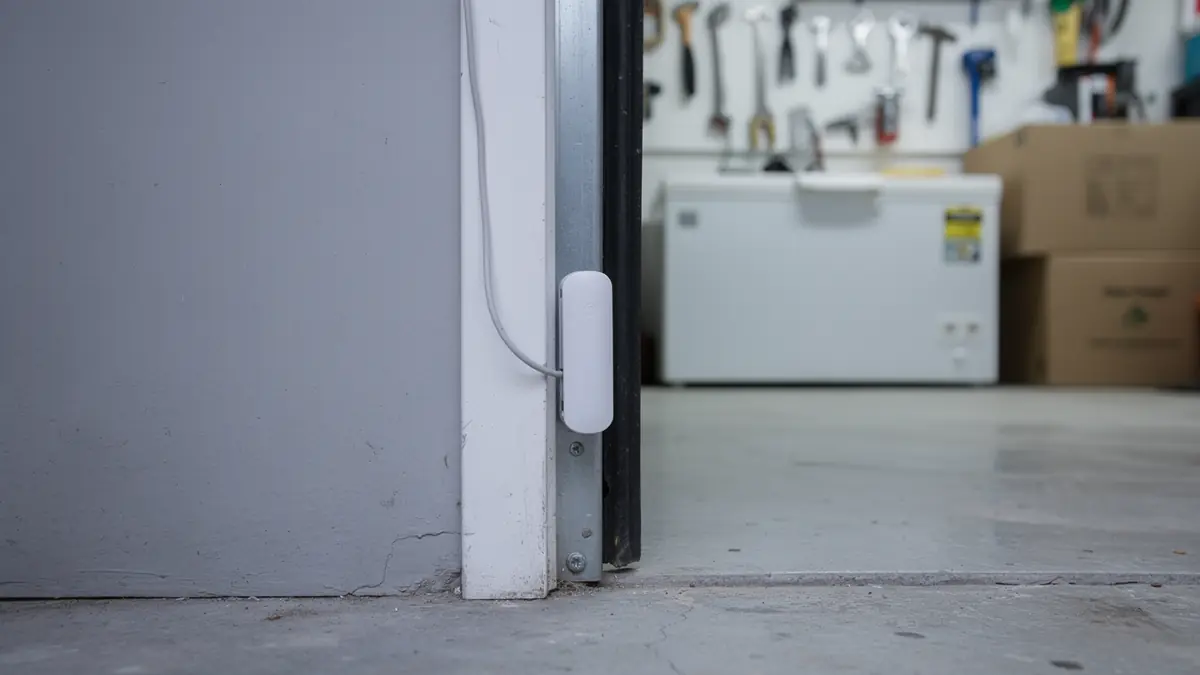
Miramar's housing stock runs from 1953 up through 2005, with most of it going up in the 1960s and 70s across the 45 or so named areas that make up this city. That spread matters for sensor drift because it means three different generations of garage door hardware are living inside the same zip codes. A house built in the 70s likely has an opener and bracket setup that's been retrofitted at least once, maybe with sensors bolted onto brackets that were never designed for them. A house from the 90s or 2000s build-out has factory-matched brackets, but after 20-plus years of settling, those brackets have moved too, just less dramatically. The sensors themselves - the two small eyes near the bottom of the track - only work when they stare at each other dead-on. A few degrees off and the door either refuses to close or reverses for no obvious reason. Owners usually notice it first as "the door won't close unless I hold the button," which is the opener's safety circuit doing exactly what it's supposed to do: refusing to trust a sensor pair that can't confirm the path is clear. It's not a malfunction. It's the system telling you something shifted.
What the Weather Here Does to It
Miramar sits in a mild temperate band, not the freeze-thaw cycle that racks door hardware apart up north. That's the good news - you're not fighting ice heaving your slab or contracting steel brackets every winter. But mild and stable doesn't mean static. Concrete slabs in this climate still move with ground moisture through the wet and dry parts of the year, just slowly and quietly, a millimeter here and there instead of a sudden crack. Over a house built in 1972, that's five decades of small, continuous shifts in the slab the track is bolted to. The sensor brackets, usually mounted to the track or the wall studs near the floor, ride along with whatever the track does. It's not a storm event that knocks your sensors out of alignment here - it's the slow accumulation of a stable climate still doing its quiet work on an old slab. That's a harder problem to notice because there's no obvious cause, just a door that used to close fine and now doesn't.
Where People Go Wrong
The most common mistake is aiming the sensors by eye and calling it done. On a house from this era, with original brackets that have flexed over the decades, "looks aligned" and "is aligned" are not the same thing - the tolerance on most sensor pairs is tighter than what you can judge by sight from standing height. The second mistake is assuming a blinking light means a sensor is broken when it usually means it's just not receiving a clean signal from its partner, which is an alignment problem, not a parts problem. The third is cleaning the lenses and stopping there. Lenses matter, but a sensor with a perfectly clean lens pointed slightly downhill from its bracket's original position still won't talk to the other side. Given that most homes in the area date to the 60s and 70s, a lot of the brackets have been touched by a prior repair, a reinstalled door, or just age - and each touch is a chance for the alignment to shift a little from true. None of this is expensive to fix once you know what's actually wrong. It's just not fixed by wiping the lenses and hoping.
When It Stops Being a DIY Job
If you've squared the brackets, cleaned both lenses, and the light still won't go solid, the bracket itself has probably bent or the wiring has frayed at a point you can't see without pulling the cover off the track. That's past the point where loosening a wingnut and nudging a sensor fixes it. We'll say plainly: we don't recommend owners pull apart the opener's logic board or rewire sensor runs themselves, not because it's secret knowledge, but because a wrong reconnect can defeat the safety reversal entirely, and you won't know it's defeated until something's under the door when it closes. If your house is on the older end of Miramar's 1953-2005 range, there's also a real chance the bracket mounting itself is outdated or stripped out from decades of adjustment, which means a bracket swap, not just a realignment. That's a short job for someone doing it daily, and a frustrating one for someone doing it once.
Frequently asked questions
Why do my garage door sensors randomly stop working and then work again?
It's almost always alignment, not a dead sensor. A bracket that's shifted slightly can still line up well enough to work sometimes and fail other times depending on vibration, temperature, or even dust on the lens. On older Miramar homes with original or once-replaced brackets, this on-again-off-again pattern is the most common complaint we hear.
Does Miramar's climate cause sensor problems the way cold weather does elsewhere?
Not in the same dramatic way. Miramar sits in a mild temperate band, so you don't get the freeze-thaw cracking that knocks brackets loose up north. What you get instead is slow, steady slab movement over decades, which on a house built in the 1960s or 70s adds up to real drift even without any single weather event to blame.
Can I just buy new sensors if mine won't align?
Usually not the fix. If the bracket itself is bent, stripped, or mounted to a track that's shifted over the years, a new sensor pair will have the exact same alignment problem the old ones had. The bracket and its mounting point need to be checked first.
Related garage door services in Miramar
More garage door guides
Book garage door service in Miramar
Call now or request a quote - tell us what the door is doing and where you are.